Can AI Replace Human Genius? What Terence Tao's Research Reveals
Fields Medal winner Terence Tao evaluated Google DeepMind's AlphaEvolve on 67 research-level mathematics problems. His findings reveal precisely where AI amplifies human intelligence and where human judgment, creativity, and strategic thinking remain irreplaceable.
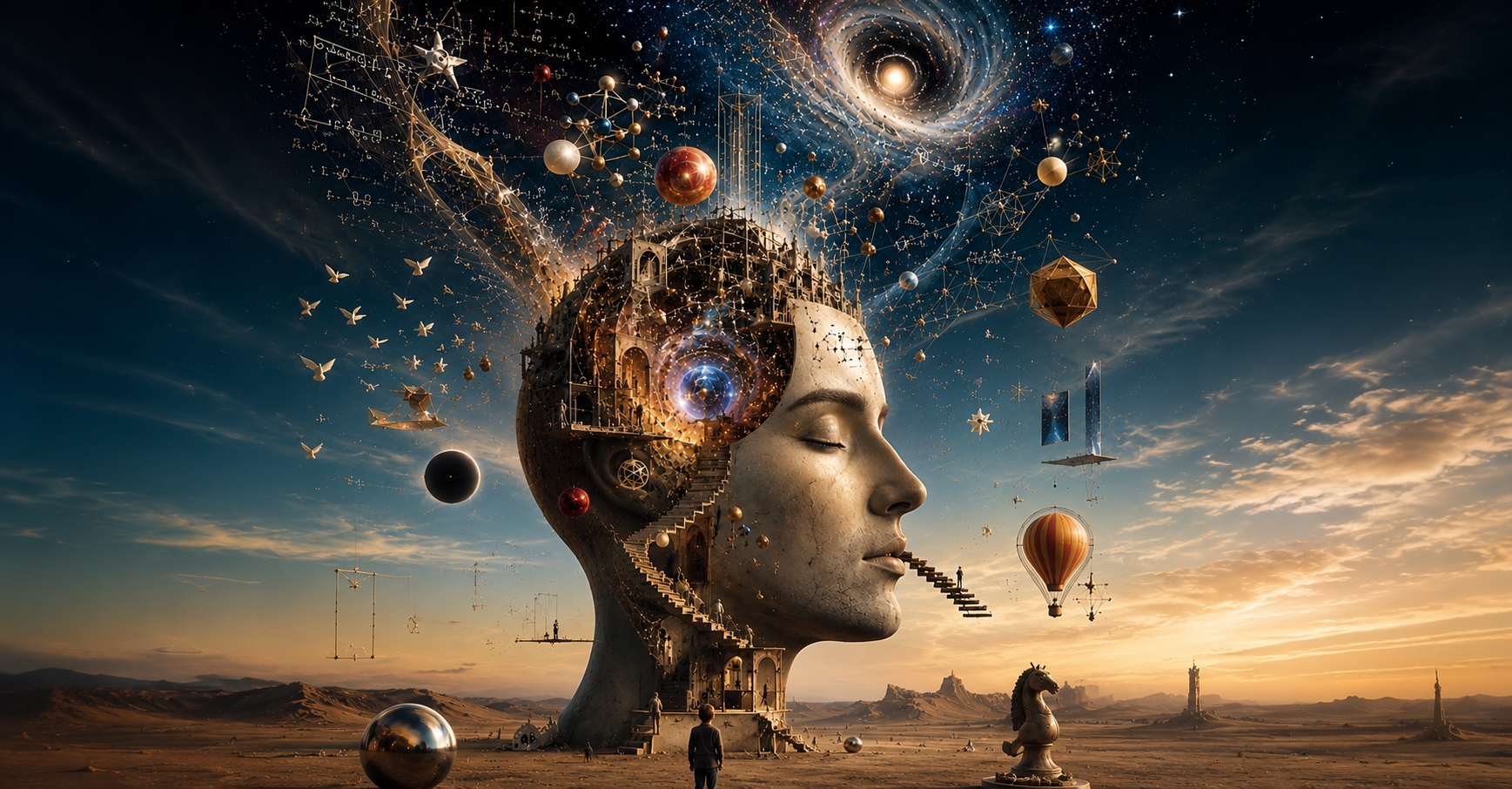
When a Mathematical Genius Tested AI: What Terence Tao Revealed About the Future of Human Intelligence
By Melissa Barton June 9, 2026
Quick Answer
Fields Medal winner Terence Tao evaluated Google DeepMind's AlphaEvolve AI system across 67 research-level mathematics problems. His finding: AI excels at large-scale exploration of known solution spaces but cannot replicate the creative intuition, strategic judgment, and conceptual insight that drive genuine breakthroughs. The same capabilities AI lacks in mathematics judgment, creativity, problem selection, and strategic thinking are the capabilities that distinguish top performers in every profession.
Executive Summary
In 2025, Terence Tao one of the most decorated mathematicians alive and a Fields Medal winner partnered with Google DeepMind to rigorously evaluate AlphaEvolve, an AI system designed to generate and optimize mathematical solutions, against 67 challenging research-level problems.
His findings are among the most credible assessments of AI's intellectual limits published to date:
- AI performs exceptionally well when problems have limited prior literature and large combinatorial search spaces
- AI consistently underperforms human researchers when problems require genuinely new conceptual frameworks
- AlphaEvolve's "hallucinations" a known weakness of large language models occasionally function as productive mutations within its evolutionary search process
- The future of high-stakes intellectual work is human-AI collaboration: humans define important problems, AI explores massive solution spaces, humans extract meaning
This is not a story about mathematics. It is a precise map of where AI creates value and where human intelligence remains irreplaceable a map that applies to every industry, every executive, and every knowledge worker navigating the age of AI.
Key Takeaways
- Terence Tao tested AI directly on 67 research-level mathematics problems in partnership with Google DeepMind
- AI excels at large-scale exploration, pattern recognition, and applying known frameworks at speed and scale
- AI struggles when tasks require genuinely new conceptual insights, creative judgment, or strategic problem selection
- AI "hallucinations" can be productive within AlphaEvolve's evolutionary framework, incorrect outputs occasionally introduce variations that unlock new solution pathways
- Tao's conclusion: AI is a force multiplier for human cognition not a replacement for it
- The collaboration model: Humans define problems → AI explores solution spaces → Humans interpret results → AI accelerates further exploration
- The business implication: The most valuable professionals of the next decade will combine human creativity and judgment with AI's computational scale
On November 5, 2025, one of the world's most accomplished mathematicians published something that may prove more consequential than any new theorem.
Not a proof.
Not a conjecture.
Not a discovery.
Instead, Fields Medal winner Terence Tao released one of the most rigorous and credible assessments yet of what artificial intelligence can and cannot do when applied to genuine intellectual work.
The results offer a rare, evidence-based glimpse into the future of human cognition.
And the conclusions are far more nuanced and more useful than either AI evangelists or AI skeptics typically acknowledge.
Who Is Terence Tao and Why This Research Matters
To appreciate the significance of this work, it helps to understand who Terence Tao is.
Tao is an Australian-American mathematician at UCLA and one of the most accomplished mathematicians of his generation. He was awarded the Fields Medal in 2006 the highest honor in mathematics, awarded every four years to mathematicians under 40 for contributions spanning harmonic analysis, partial differential equations, combinatorics, and number theory.
He is not a technology executive with a product to sell.
He is not a commentator speculating about AI from the outside.
He is a working researcher who tested AI directly on the hardest problems he knows and published exactly what he found.
That transparency is itself significant. At a time when AI discourse is dominated by marketing claims, fear, and ideology, Tao offered something rarer: evidence.
The Experiment: 67 Problems, Three Disciplines
Tao and his collaborators worked with Google DeepMind to evaluate AlphaEvolve an AI system that combines large language model reasoning with evolutionary search algorithms against 67 challenging research problems spanning three major mathematical disciplines:
- Analysis
- Combinatorics
- Geometry
These were not textbook exercises. Many had resisted improvement for years. Some had extensive academic literature behind them. Others remained relatively unexplored.
The goal was direct: could AI contribute meaningfully to frontier research?
The answer was yes but only in very specific conditions.
The Critical Finding: AI's Performance Depends on Context
The most important result was not whether AI succeeded or failed overall.
It was understanding precisely where it succeeds and where it does not.
Where AI Excels
AlphaEvolve performed well when problems had two characteristics:
Limited prior literature. When fewer researchers had explored a problem, AI more often discovered improvements over existing results. With less established knowledge to recombine, the system's exploratory capacity became an advantage.
Large combinatorial search spaces. When solutions required exploring vast numbers of possible configurations or combinations of known techniques, AlphaEvolve demonstrated clear advantages over human researchers working alone.
In Tao's assessment, the system excelled at discovering constructions that were already within reach of existing theory but had remained undiscovered because of the sheer volume of human effort required to find them.
AI could search intellectual territory faster than humans.
Where AI Struggles
The limitations were equally clear.
When problems required genuinely new conceptual insights new ways of thinking about a problem rather than new combinations of existing approaches AlphaEvolve consistently underperformed human mathematicians.
On problems with deep theoretical foundations and extensive literature, the AI typically matched or only marginally improved upon the best existing results.
It could recombine existing knowledge at scale.
It could not reliably generate entirely new frameworks of understanding.
The distinction is fundamental. Progress in any field mathematics, business, science, strategy advances not merely through finding answers within existing frameworks but through discovering new ways to think. That capacity remains, for now, a distinctly human strength.
Why AI "Hallucinations" Can Become a Feature
One of the more counterintuitive findings involves how AlphaEvolve handles a well-known AI weakness.
Large language models frequently hallucinate generating confident but incorrect or fabricated outputs. In most applications, this is a serious flaw.
Within AlphaEvolve's evolutionary framework, however, hallucinations occasionally become productive.
Most incorrect outputs are discarded quickly.
But some introduce unexpected variations that help the system escape local optima the trap of converging on a good-but-not-great solution and discover entirely new solution pathways.
The process resembles biological evolution. Most mutations are neutral or harmful. A small number change everything.
This reframes a known AI weakness as a potential source of innovation under the right conditions and with the right architecture.
What This Means for Business Leaders and Knowledge Workers
Most readers are not mathematicians. But Tao's findings apply directly to every profession that depends on thinking.
The capabilities AI lacks in mathematics judgment, intuition, problem selection, strategic thinking, and creativity are the same capabilities that distinguish top performers in every field.
Consider what Tao found:
- AI excels when the solution space is large but the framework is known
- AI struggles when the task requires deciding which problems are worth solving
- AI struggles when success depends on forming a genuinely new conceptual approach
- AI struggles when the work requires cross-disciplinary insight or strategic judgment
Now translate that to business:
- AI can analyze vast datasets and surface patterns but cannot decide which patterns matter strategically
- AI can generate marketing copy at scale but cannot develop a brand positioning that reflects genuine market insight
- AI can model financial scenarios but cannot exercise the judgment that distinguishes a sound investment from a plausible-looking mistake
- AI can draft a strategy document but cannot replace the executive who knows which problems are actually worth solving
The lesson is not that AI will replace experts.
The lesson is that experts who learn to work with AI will outperform experts who do not.
This has direct implications for every organization building an AI adoption roadmap, developing an AI governance framework, or completing an AI readiness assessment. The question is no longer whether to integrate AI. It is how to structure human-AI collaboration so that human judgment directs AI's computational power rather than being displaced by it.
The Collaboration Model
The most likely future is neither human dominance nor machine dominance.
It is partnership.
The pattern emerging across mathematics, medicine, engineering, and business strategy looks increasingly consistent:
- Humans define important problems identifying what is worth solving and why
- AI explores massive solution spaces searching faster and more exhaustively than humans can
- Humans interpret results extracting meaning, identifying what matters, discarding what does not
- AI accelerates further exploration scaling the next iteration of search
- Humans extract insight forming the conceptual understanding that drives real progress
This cycle is already operating in research laboratories. It is beginning to operate in boardrooms, marketing departments, legal practices, and engineering teams.
The individuals and organizations that thrive will not be those competing against AI. They will be those who learn to think alongside it directing its power toward problems that matter.
For business leaders developing a generative AI strategy, Tao's methodological approach offers a direct model: test AI against real problems, document where it helps and where it fails, and build strategy on evidence rather than hype or fear.
The Bigger Picture
What Terence Tao's research ultimately demonstrates is that we are entering a new phase of human intellectual history.
AI is becoming a force multiplier for cognition.
Not a replacement for human intelligence.
An amplifier of it.
The most valuable professionals of the next decade may not be those with the largest knowledge bases or the strongest technical skills alone. They may be those who learn to combine human creativity and judgment with computational scale who know which questions to ask, which problems are worth solving, and how to extract meaning from what AI finds.
Because the future is not humans versus machines.
It is humans with machines, working on problems that neither could solve alone.
Terence Tao gave us one of the clearest demonstrations yet of what that looks like and what it requires of us.
Research Highlights
| Finding | Detail |
|---|---|
| Problems evaluated | 67 research-level problems across analysis, combinatorics, and geometry |
| AI advantage conditions | Limited prior literature; large combinatorial search spaces |
| AI limitation conditions | Problems requiring genuinely new conceptual frameworks |
| Hallucination reframe | Incorrect outputs occasionally function as productive evolutionary mutations |
| AlphaEvolve architecture | Combines LLM reasoning with evolutionary search algorithms |
| Research partner | Google DeepMind |
| Publication | November 2025 |
Frequently Asked Questions
Can AI replace human intelligence?
Based on current research including Terence Tao's 2025 evaluation of Google DeepMind's AlphaEvolve AI cannot replace human intelligence. AI excels at large-scale search, pattern recognition, and applying known frameworks at speed. It consistently falls short when tasks require creative judgment, novel problem formulation, strategic thinking, and the ability to identify which questions are worth asking. These remain distinctly human capabilities.
What did Terence Tao discover about AI and mathematics?
Terence Tao evaluated Google DeepMind's AlphaEvolve across 67 research-level mathematical problems. He found that AI performs well on problems with limited prior literature and large combinatorial search spaces, but underperforms human mathematicians when problems require genuinely new conceptual insights. His conclusion: AI is a powerful research collaborator, not a replacement for human mathematical thinking.
What are the limits of AI reasoning?
AI reasoning is limited in its ability to form genuinely novel conceptual frameworks, exercise creative judgment, identify which problems are worth solving, and make the strategic leaps that define breakthrough thinking. AI can recombine existing knowledge at scale but cannot reliably generate entirely new ways of understanding a problem.
What human skills remain most valuable in the age of AI?
The human skills most resistant to AI are creative judgment, novel problem formulation, strategic thinking, cross-disciplinary insight, ethical reasoning, and the ability to recognize which questions matter. These capabilities become more valuable as AI handles routine cognitive tasks not less.
What does human-AI collaboration look like in practice?
Effective human-AI collaboration follows a consistent pattern: humans define important problems, AI explores massive solution spaces, humans interpret results and extract meaning, AI accelerates further exploration. This cycle is already operating in mathematics, medicine, engineering, and business strategy.
Will AI replace knowledge workers?
AI will not replace knowledge workers who develop the skills to work alongside it. The professionals who thrive will combine human creativity, judgment, and strategic thinking with AI's capacity for large-scale search and pattern recognition. Those who treat AI as a threat rather than a tool risk being outperformed by those who do not.
What does Terence Tao's research mean for business leaders?
Tao's findings map directly to business: AI excels at applying known frameworks at speed and scale, while humans excel at defining the right problems, forming novel strategies, and extracting meaning from results. Business leaders should invest in the human capabilities AI cannot replicate and deploy AI to scale the capabilities it can.
Can AI replace mathematicians?
AI will not replace mathematicians. It will transform how mathematical research is conducted accelerating discovery and handling computational verification while human mathematicians provide creative direction, conceptual insight, and the judgment to identify meaningful problems. Terence Tao's 2025 research directly supports this conclusion.
What is AlphaEvolve?
AlphaEvolve is an AI system developed by Google DeepMind that combines large language model reasoning with evolutionary search algorithms to explore mathematical problem spaces. It is designed to generate and optimize solutions at a scale impossible for human researchers working alone.
How does AI handle creativity?
Current AI systems do not possess creativity in the human sense. They can recombine existing ideas at scale and generate novel combinations through pattern recognition, but they cannot form genuinely new conceptual frameworks or make the creative leaps that define breakthrough thinking in any field.
Sources
Google DeepMind AlphaEvolve: A Gemini-Powered Coding Agent for Designing Advanced Algorithms
Terence Tao What's New (Personal Research Blog) terrytao.wordpress.com
Nature AlphaGeometry: An Olympiad-Level AI System for Geometry
International Mathematical Union Fields Medal Award Information
Stanford University Stanford AI Index Report 2025
Lean Theorem Prover Lean 4 Formal Proof Assistant
About the Author
Melissa Barton is the Founder of PalmBeachCounty.ai, an AI strategist, consultant, and marketing operations executive focused on helping businesses, nonprofits, and organizations navigate the practical realities of artificial intelligence adoption.
Learn more: https://palmbeachcounty.ai/about
Related Articles
- Generative AI Business Strategy 2026 How to build a forward-looking AI strategy for your organization.
- AI Governance Framework for Business How organizations build responsible, accountable AI policies.
- AI Adoption Roadmap for Organizations A structured framework for workforce readiness and AI integration.
- AI Readiness Assessment Guide 2026 Evaluate your organization's readiness to deploy AI effectively.
- AI for Small Business Practical AI tools and strategies for small business owners.
- How Local Governments Can Use AI AI applications in public sector innovation and service delivery.
- AI Consultant Florida Working with an AI consultant in Florida to build competitive advantage.
- AI Economic Development Florida How AI is reshaping economic development across Florida.
Explore Topics
Written by
Melissa Barton
Founder of PalmBeachCounty.ai · AI Consultant · Marketing Strategist
Melissa Barton is a Florida AI consultant and marketing strategist with more than 25 years of experience. She holds a Google AI Professional Certificate and seven Anthropic Academy certifications. She works with businesses, nonprofits, and government agencies across South Florida on AI strategy, marketing operations, and organizational transformation.